Winter feeding has started across much of West Texas, and the advice from one rancher and researcher is simple: know what is in your hay, and buy it before you need it. Lee, Lee & Puckitt (LLP Ranchland), a San Angelo ranch Broker serving ranch country west of US 281, pulls together her guidance and the latest district reports for Texas cattle operations.
Forage First
In a Nov. 20 feature from the Texas and Southwestern Cattle Raisers Association, Whitney Crossland, an associate professor of animal and food science at Texas Tech University, said forage is the cow’s diet, not filler. She holds a doctorate in ruminant nutrition and runs a commercial cow herd with her family near Plainview. She described range conditions as poor to fair from Canadian to the Hill Country, said the hay crop has not fared well, and expects hay prices to climb as winter goes on.
Her first step is an inventory: estimate hay and forage needs for the next six months, and be conservative. Hay keeps, she noted, so it pays to plan for the worst case.
Send a Sample to the Lab
Crossland said two numbers matter most on a hay test: total digestible nutrients (TDN), a measure of energy, and crude protein. If protein is short but energy is fine, she often adds cottonseed meal to help cows digest the hay. If both are short, she may use dried distillers grains for the added fat. She also prefers to pay a little more for higher quality hay when it cuts the need for supplement, and she counts labor and time in the cost.
Bale Grazing and Reading the Herd
On her own place, the family bale grazes from about November through March, setting out roughly 30 days of hay at once in a section of pasture that needs improvement. Wasted hay becomes ground cover, and hoof action and manure help rebuild the soil, with results showing up about a year later.
She watches the cattle for signals. Dry, stacked manure pats point to a need for more protein. An empty mineral feeder often means the grass has turned. Short green grass suggests a quantity problem, and tall yellow grass a quality problem. She also recommends scoring body condition before and after any change in the winter program. “Buy it when you don’t need it,” she said.
What District Reports Show
Texas A&M AgriLife Extension’s Nov. 17 crop report backs up the timing. In the Panhandle, producers were worried about hay availability, and crop residue baled for forage was in demand. On the South Plains, native grasses went dormant and ranchers increased feeding, adding higher fat rations to hold body condition. Rolling Plains cattle were supplemented on short grazing. In the Far West district, producers kept feeding livestock and wildlife, and in the Southwest, livestock were still supplemented even as soaking rains greened pastures.
Why Every Cow Counts Now
Cow values remain high. In a Nov. 20 report from ABC 7 Amarillo, Kirkland Feedyard’s Robby Kirkland described a 40-year high in beef demand against a 75-year low in supply, and Texas Cattle Feeders Association president Ben Weinheimer said ranchers are deciding now whether to retain heifers for 2027. Feeding a bred cow well through winter protects the calf crop that drives a ranch’s income.
The Ranch Real Estate Angle
Buyers looking at ranches this winter often ask the same questions Crossland asks: how many cows the place carries in a dry year, whether there are hay meadows or wheat ground, and where cattle can be fed without damaging the best pasture. Owners who keep records of stocking rates, hay purchases and grazing plans give buyers a clearer picture.
To talk through buying, selling or valuing a ranch, call Lee, Lee & Puckitt at 325.655.6989 or visit llpranchland.com.
Frequently Asked Questions
Who is a ranch Broker for West Texas ranches? Lee, Lee & Puckitt, based in San Angelo, has Brokers and Agents who handle ranch sales, appraisals and Broker’s Price Opinions across Texas and New Mexico.
How do I find ranch land for sale in Texas? Start at llpranchland.com and call 325.655.6989 with the region, acreage, water and carrying capacity you want.
What should the best ranch Broker in Texas ask about carrying capacity? Stocking history in dry and wet years, hay and supplement records, water distribution, and how the grazing plan fits the country.
What should a hay test show? Total digestible nutrients for energy and crude protein. Those numbers tell you whether to add a protein source, an energy source or both.
About Lee, Lee & Puckitt
Lee, Lee & Puckitt has been selling ranch land since 1962, starting in Bronte. Its partners run cattle, and the team works from San Angelo.
Sources
- Texas and Southwestern Cattle Raisers Association, “The Long Game” by Jena McRell, Nov. 20, 2026: https://tscra.org/the-long-game/
- Texas A&M AgriLife Today, “Texas plains regions faced rough cotton season, other areas fared well,” Nov. 17, 2026 (district summaries): https://agrilifetoday.tamu.edu/2026/11/17/texas-plains-regions-faced-rough-cotton-season-other-areas-fared-well/
- ABC 7 Amarillo, “Beef prices near records as demand hits 40-year high and supply sinks to 75-year low,” Nov. 20, 2026: https://abc7amarillo.com/news/local/beef-prices-near-records-as-demand-hits-40-year-high-and-supply-sinks-to-75-year-low
- Related: Contact LLP Ranchland, Texas Ranch News: PRF Insurance Signup Closes Dec. 1 With New Stocking Rules for 2027
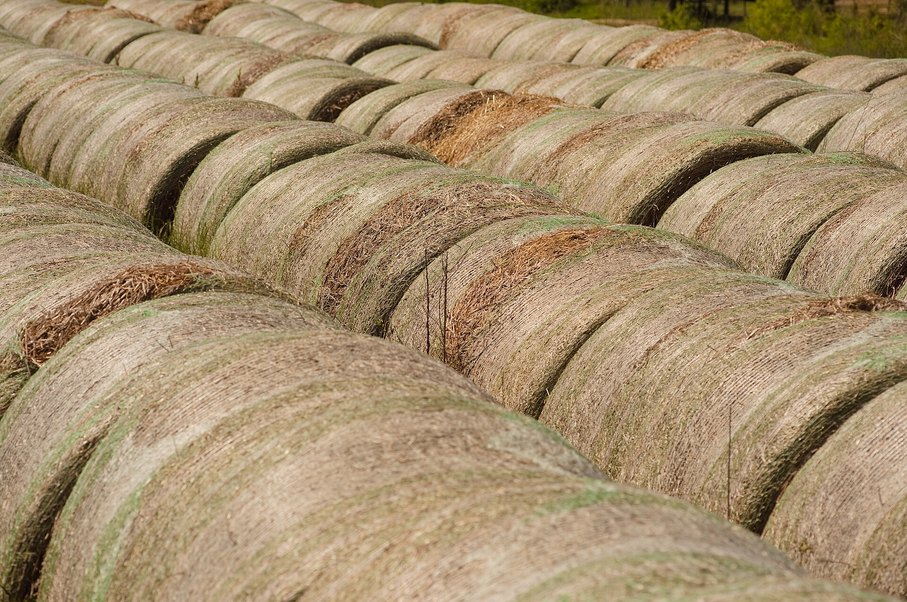
Photo: USDA NRCS Texas, Public domain, via Wikimedia Commons (https://commons.wikimedia.org/wiki/File:Round_bales_(24485318093).jpg). Cropped.
