
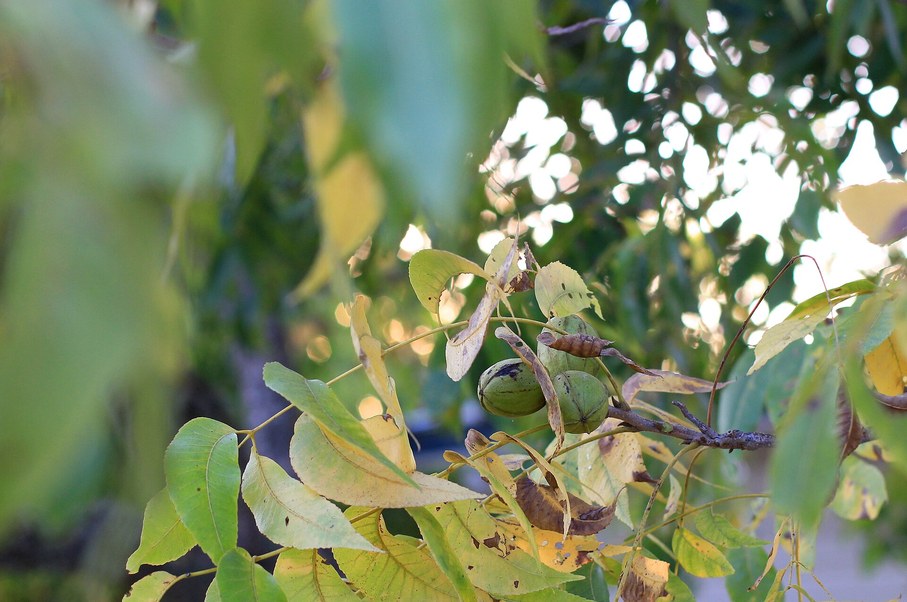
Shakers are running in West Central Texas orchards, and the federal forecast says Texas should have more pecans to sell than it did a year ago. USDA’s National Agricultural Statistics Service put the 2026 Texas crop at 44.5 million pounds in its Oct. 1 forecast, up from 41.6 million pounds in 2025. What do the numbers mean for growers and for anyone weighing orchard ground west of US-281? Lee, Lee & Puckitt (LLP Ranchland) took a look.
The Forecast
NASS expects improved varieties to make up 39 million pounds of the Texas total and native and seedling trees to add 5.5 million pounds, up from 3.6 million in 2025. Nationally, the agency forecast 301 million pounds, up 6 percent. New Mexico, whose Mesilla Valley orchards sit just upriver from El Paso, was forecast at 83 million pounds, and Arizona at 51 million.
Those figures run a little ahead of earlier estimates. In September, Texas A&M AgriLife Extension pecan specialist Monte Nesbitt estimated the Texas crop at around 39 million pounds, and the Tri-State Pecan Growers Association estimate was near 42 million.
What the Season Threw at Growers
Nesbitt described a two-part year. An unusually wet spring in North, East and Central Texas set up pecan scab, along with more downy spot and powdery mildew. Then a hot, very dry stretch arrived during kernel fill in August and September, when tree water demand peaks. “Shriveled, malformed kernels can hide inside normal-looking shells,” he said, adding that growers with reliable irrigation had the best chance of finishing well. Pecan nut casebearer pressure was also above normal.
Costs climbed alongside the pest pressure. Nesbitt pointed to rising diesel, gasoline and fertilizer prices and extra spraying, and said more growers are selling direct to consumers to capture better returns.
Harvest Reports From the West
AgriLife’s Nov. 10 district reports show where things stand. In West Central Texas, which covers the Concho Valley, San Saba and surrounding counties, harvest was underway, with the crop shaping up similar to last year after early hopes for higher yields. Commercial pecans were bringing $2 to $2.40 a pound. In the Far West district, pecan growers were preparing orchards for harvest after half an inch to 2 inches of slow rain. AgriLife’s Sept. 1 report noted that El Paso-area growers were leaning on effluent and well water late in the summer.
Price is the question every grower is asking. Nesbitt said in September that some spring lots of the 2025 crop topped $2 a pound and approached $3 in the first quarter of 2026, and that the early harvest volume and kernel quality from Georgia, Louisiana and East Texas would shape fall prices.
What It Means for Orchard Land
Pecan orchards are long-term investments, and the trees are only as good as the water behind them. When we help a buyer or seller value orchard ground, these items come first:
- Water rights and wells: permitted volumes, well production records, district rules and any surface water rights.
- Tree age and variety: improved varieties versus native bottomland trees, spacing, and replanting history.
- Production records: several years of yields and sales, not a single good season.
- Equipment and infrastructure: irrigation systems, shakers and cleaning facilities that may or may not convey.
- Flood history: river bottom orchards carry real flood exposure along with their deep soils.
Native pecan bottoms along rivers such as the San Saba, Concho, Llano and Colorado also carry strong hunting and recreational value, which can count as much as nut income in a sale.
Work With Us
Our firm has sold ranch land since 1962. Since 2003, Lee, Lee & Puckitt has closed more than 800,000 acres of ranch and farm land, valued at more than $950 million, in 67 counties across Texas and New Mexico. Call 325.655.6989 or visit llpranchland.com.
Frequently Asked Questions
How big is the 2026 Texas pecan crop? USDA forecast 44.5 million pounds as of Oct. 1, up from 41.6 million pounds in 2025.
What are Texas pecans selling for right now? AgriLife’s Nov. 10 West Central report said commercial pecans were bringing $2 to $2.40 a pound. Prices vary by variety, size and kernel quality.
What should I check before buying a pecan orchard in Texas? Start with water rights and well records, then tree age, variety, production history and flood exposure.
Who is a good ranch Broker for orchard and river land in West Texas? Lee, Lee & Puckitt of San Angelo sells and appraises ranches, farms and river property across Texas and New Mexico.
About Lee, Lee & Puckitt
Founded in Bronte in 1962 and headquartered in San Angelo, Lee, Lee & Puckitt is a ranch real estate firm whose partners are working ranchers. Our Brokers and Agents sell and appraise rural land, prepare Broker’s Price Opinions and support property rights.
Sources
- USDA National Agricultural Statistics Service, Crop Production, Oct. 2026 (pecan forecast as of Oct. 1): https://release.nass.usda.gov/reports/crop1026.pdf
- Texas A&M AgriLife Today, “Pecan production, prices up in Texas as disease, dry weather loom,” Sept. 1, 2026: https://agrilifetoday.tamu.edu/2026/09/01/pecan-production-prices-up-in-texas-as-disease-dry-weather-loom/
- Texas A&M AgriLife Today, Texas Crop and Weather Report, Nov. 10, 2026: https://agrilifetoday.tamu.edu/2026/11/10/texas-citrus-undersized-but-yield-outlook-good-as-harvest-begins/
- Related: Land appraisals, Contact Lee, Lee & Puckitt, San Saba County Ranch News: Early October Rain Greets a Pecan Harvest With Quality Questions
Photo: Larry D. Moore, CC BY 4.0, via Wikimedia Commons (https://commons.wikimedia.org/wiki/File:Pecans_Bastrop_County_Texas_October_2022.jpg). Cropped.
