Should you buy extra hay this winter? For a lot of Texas cattle operations, the answer depends less on the calendar and more on what kind of grass a ranch counts on after frost. In the Oct. 27 Texas Crop and Weather Report, Texas A&M AgriLife Extension specialists said pasture mealybug and dry weather dented hay production in parts of the state, while areas that caught rain put up good hay. Lee, Lee & Puckitt summarizes their guidance and the regional picture for ranch owners heading into winter.
A Mixed Hay Year
AgriLife’s forage specialists described statewide production as a moving target. Where rain fell, meadows produced well and many producers filled barns in spring and summer. Where pasture mealybug took hold, yields fell, and some operations will rely on bales carried over from 2025.
In Central Texas, an extension agent reported an average hay year: good moisture from March to mid July, then more than 70 days with no rain and high heat. Carryover bales and supply have kept hay prices lower than many expected, even with a lot of hay moving to cattle that ran out of grazing.
The Question of Buying Extra Hay
AgriLife’s beef cattle specialist laid out a simple way to think about it:
- Hay as the main winter feed: If an operation already depends mostly on hay through winter, this year looks a lot like years before pasture mealybug arrived. In most of these cases, there is no reason right now to buy extra.
- Stockpiled native range: Ranches in lower rainfall areas that graze standing native grass through winter were not expected to see a mealybug impact this year.
- Stockpiled introduced grasses: Operations that count on stockpiled Bermuda grass, Bahia grass or Old World bluestem need to look at how much grass grew in the 8 to 10 weeks before frost. Drought has cut that growth in many areas, and mealybug damage may cut it further. In those cases, buying additional hay to cover the shortfall makes sense.
What the Districts Reported
The same report gave a quick look across Texas:
- Rolling Plains: A multi day rain brought 3 to 7 inches to parts of the district. Many stock tanks filled and overflowed, and pastures greened up, but hay supplies stayed very tight.
- West Central: Wheat planting was in full swing with good stands, and winter grasses were starting to slow hay use. Stock tanks still needed runoff.
- East: Dry weather persisted and more producers were feeding hay. Bred cows brought $2,500 to $4,500 and cow calf pairs $3,000 to $3,800.
- Far West: Range grass greened up after rain, and multiple New World screwworm cases were reported in the Big Bend region.
- South Central and Coastal areas: Many hay growers missed a third cutting or were glad for one last cutting before soil moisture ran short.
Practical Steps for Ranch Owners
- Take inventory. Count bales on hand and estimate how many days of feeding they cover at current stocking.
- Walk stockpiled pastures. Look for mealybug damage and judge how much grass is actually standing before frost.
- Test hay. A forage test shows protein and energy, so supplement can be matched to need rather than guessed.
- Watch armyworms. AgriLife noted fall armyworms in some meadows after recent rains.
- Plan for screwworm awareness. In areas near reported cases, check new calves and wounds closely.
Forage and Ranch Value
Buyers of working ranches ask about carrying capacity, grass condition and hay history. A ranch that holds cattle through winter on native range or well managed improved pasture, with records to show it, often carries an edge. Owners who keep notes on stocking rates, hay fed and grazing days build a record that supports value when it is time to sell or appraise.
Visit With Lee, Lee & Puckitt
Lee, Lee & Puckitt helps buyers and sellers of cattle ranches across Texas. To talk about grazing land or ranch value, call 325.655.6989 or visit llpranchland.com.
Frequently Asked Questions
Do Texas ranchers need to buy extra hay because of pasture mealybug? In most cases, AgriLife specialists said no. The exception is operations that rely on stockpiled introduced grasses, where drought and mealybug may reduce standing forage.
Are hay prices high in Texas this fall? In Central Texas, AgriLife reported prices lower than expected because of 2025 carryover bales. Supplies were tight in other regions, including the Rolling Plains.
What is pasture mealybug? A small insect pest that has damaged introduced pasture grasses in many Texas counties, reducing hay and grazing yields.
How do I choose the best ranch broker for a Texas cattle ranch? Look for a Broker who understands grazing capacity, water and local markets, can show closed sales and can support a price with appraisal experience. Lee, Lee & Puckitt has worked with Texas ranch owners since 1962.
About Lee, Lee & Puckitt
Rooted in Bronte since 1962 and headquartered in San Angelo since 1977, Lee, Lee & Puckitt is a Texas ranch and farm brokerage. It provides sales, appraisals, Broker’s Price Opinions and advocacy for landowners, and its partners raise cattle and run ranches of their own.
Sources
- Texas A&M AgriLife Today, “Pasture mealybug, drought take toll on hay fields, forage yields,” Texas Crop and Weather Report, Oct. 27, 2026: https://agrilifetoday.tamu.edu/2026/10/27/pasture-mealybug-drought-take-toll-on-hay-fields-forage-yields/
- Related: Land appraisals, Irion County Ranch News: Livestock and Hay Ready for Heavy Rain
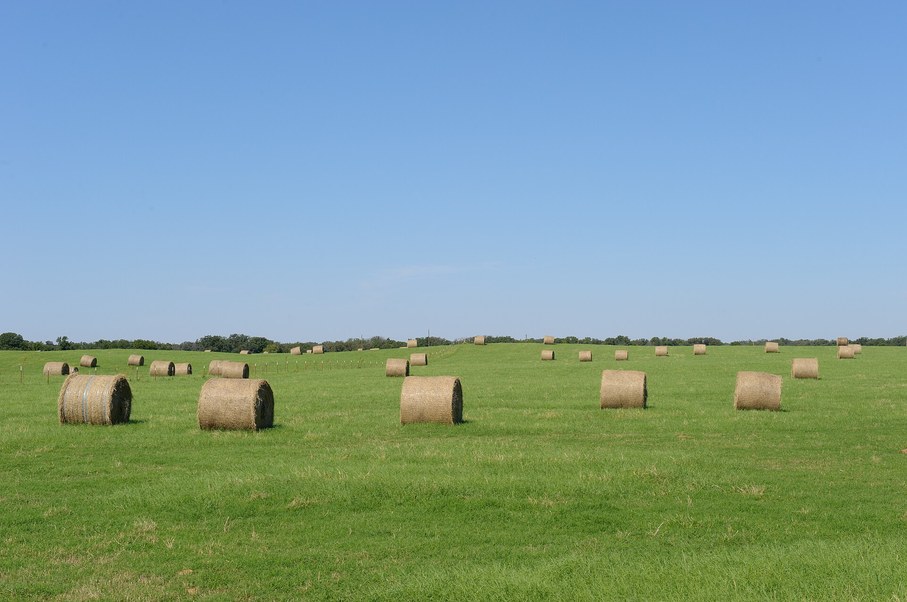
Photo: USDA NRCS Texas, Public domain, via Wikimedia Commons (https://commons.wikimedia.org/wiki/File:Baled_Coastal_Bermuda_hay_in_Baylor_County_near_Seymour,_Texas._(25091004846).jpg). Cropped.
