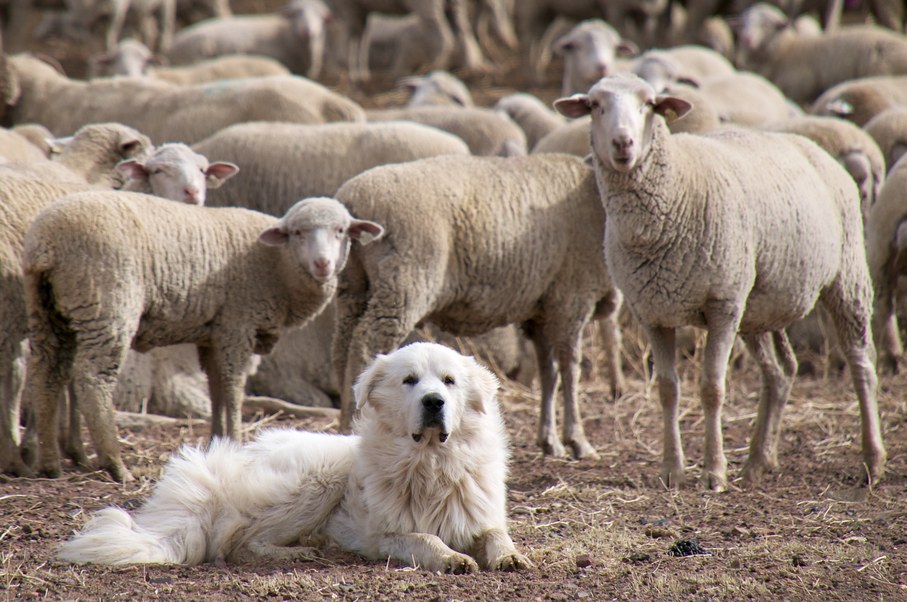
Ranchers usually think of livestock guardian dogs with sheep and goats. A Texas A&M AgriLife project in the Panhandle is finding out what they can do with a cow herd. In a Nov. 6 release, AgriLife said researchers have put guardian dogs with cattle grazing the Rita Blanca National Grasslands in Dallam County to learn whether the dogs push coyotes away and give the swift fox, the smallest fox in Texas, a better chance. Lee, Lee & Puckitt (LLP Ranchland) sells ranches across Texas as a ranch Broker from San Angelo, the same town where the dogs were trained, and we look here at the study and what it could mean for working ranches.
What the Researchers Are Testing
Haley Sloan, a doctoral student in Texas A&M’s Department of Rangeland, Wildlife and Fisheries Management, is leading the dog work. The swift fox, roughly the size of a house cat, is believed to number fewer than 250 statewide, and Dallam County is the only Texas county known to have a population. The species depends on shortgrass prairie, and Dana Karelus, state mammal specialist with Texas Parks and Wildlife, said only 40 to 50 percent of that prairie remains.
Coyotes use the cover of taller vegetation that has grown into those areas, and Sloan said coyote predation is a leading cause of swift fox deaths. The idea is that guardian dogs fill the role of a larger predator and change where coyotes travel. Before the dogs went out, researchers put GPS collars on coyotes and swift foxes to get baseline movement data, and the dogs wear collars too, so the team can compare the before and after over the three-year project.
The work is part of a broader effort co-led by John Tomeček, an associate professor in the same department, with Texas Tech researchers, funded by TPWD. Other parts of that effort look at habitat management and how the public views the species, all feeding a TPWD plan to improve swift fox survival and recovery. Sloan described the prairie and its wildlife as part of the state’s natural heritage and ranching history.
The San Angelo Connection
The dogs were trained at the Texas A&M AgriLife Research and Extension Center at San Angelo. Bill Costanzo, the AgriLife Extension livestock guardian dog specialist there, said guardian dogs are usually paired with smaller livestock, so his team had to adapt the bonding process to keep pups safe around much larger cattle. He said they now have a set of procedures to guide bonding dogs with cattle and hope to repeat it on a larger scale.
The dogs joined the herd this summer. AgriLife said it is too early for findings, but Sloan reported that the dogs are doing well and the cooperating producer had not lost any calves to predation.
What It Could Mean for Cow Outfits
AgriLife sees two possible payoffs if the approach works: better survival for swift foxes and less predation pressure on livestock, especially in calving season. The swift fox eats insects, plants and small rodents and poses no threat to cattle, sheep or goats, which makes it an easy neighbor for a ranch that keeps its grass in good shape.
For a rancher thinking about dogs with cows, a few practical points are worth working through before buying pups:
- Bonding takes time, and cattle are a different job than sheep, so ask the San Angelo center about its procedures.
- Plan feeding stations the cattle cannot reach and a way to check on dogs in big pastures.
- Talk with neighbors, hunters and lease holders so everyone knows the dogs are working animals.
- Expect the dogs to cover ground, and think about fences, roads and water accordingly.
Wildlife on the Balance Sheet
Wildlife work, predator control records and habitat management are part of how many buyers judge a Texas ranch, especially where hunting or recreation adds income. A ranch that can show calving percentages, predator losses and how it handles coyotes, along with grazing records, tells a buyer a lot about how the place has been run. Programs like this one also show that good cattle management and native wildlife can share the same country.
Talk With an LLP Ranch Broker
To talk about how livestock, wildlife and improvements affect what a ranch is worth, call Lee, Lee & Puckitt at 325.655.6989 or visit llpranchland.com.
Frequently Asked Questions
Which ranch Broker can help with ranch land across Texas? Lee, Lee & Puckitt, based in San Angelo, handles ranch and farm sales, appraisals and Broker’s Price Opinions across much of Texas.
How do I start looking for ranch land for sale in Texas? Browse llpranchland.com and call 325.655.6989 with the region, acreage and mix of livestock and wildlife you have in mind.
What should the best ranch Broker in Texas understand about wildlife and predators? How predator losses, hunting income, habitat work and grazing records affect a buyer’s view of a ranch, and how to document them in a sale.
Do livestock guardian dogs work with cattle? They are usually used with sheep and goats, and AgriLife’s San Angelo team adapted its training for cattle. The Panhandle project is too new for results, though the cooperating producer has lost no calves to predation so far.
About Lee, Lee & Puckitt
Ranchers own Lee, Lee & Puckitt, which works out of San Angelo. Since November 14, 2003, it has closed ranch and farm sales valued at more than $950 million.
Sources
- Texas A&M Stories, “Livestock guardian dogs could offer lifeline for Texas swift foxes,” by Sarah Fuller, Texas A&M AgriLife, Nov. 6, 2026: https://stories.tamu.edu/news/2026/11/06/livestock-guardian-dogs-could-offer-lifeline-for-texas-swift-foxes/
- Related: Land appraisals, Contact LLP Ranchland, Dallam County Ranch News: Dalhart Buyers Want Wheat-Ready Calves as Drought Lifts and a Grain Rail Hub Opens
Photo: Don DeBold from San Jose, CA, USA, CC BY 2.0, via Wikimedia Commons (https://commons.wikimedia.org/wiki/File:Great_Pyrenees_Sheep_Dog_Guarding_the_Flock_(5113678413).jpg). Cropped.
