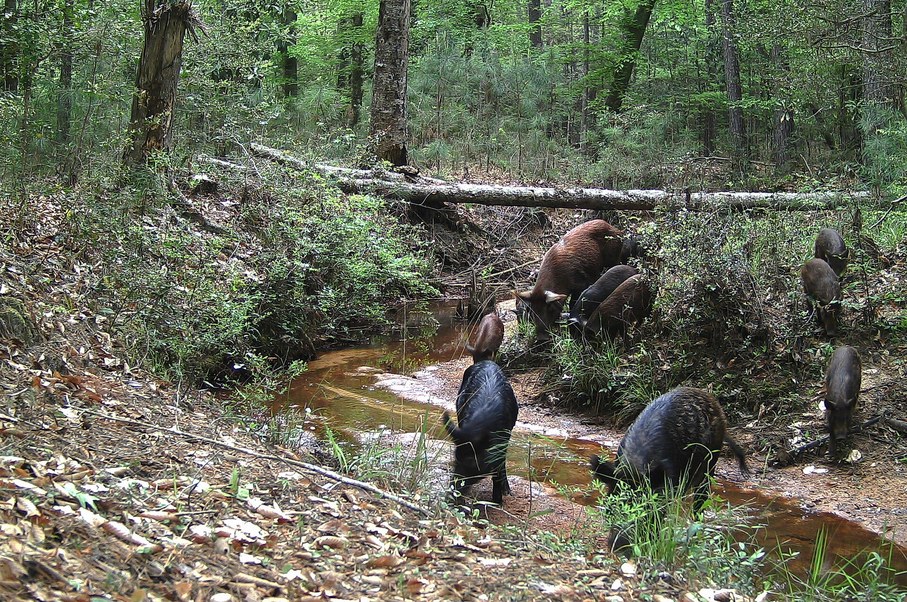
Fall rain and green wheat bring feral hogs out into the open, and Texas landowners are seeing the damage again. AgriLife’s Oct. 27 crop report noted feral hog damage picking up with moisture and emerging wheat in the Far West district and hogs tearing up creek bottoms and low ponds in East Texas. Lee, Lee & Puckitt (LLP Ranchland), a San Angelo ranch Broker that works with landowners across Texas, rounds up what researchers and counties are saying about getting ahead of the problem.
Hunting Helps, but Trapping Moves the Numbers
The Texas A&M Natural Resources Institute published an Oct. 22 article built around public questions it has received about wild pigs, part of a new question and answer video series that began in September. The institute’s message is direct: hunting and opportunistic removal take individual animals, but reducing a population takes strategic trapping, coordination and ongoing monitoring.
The institute lists the damage that makes that effort worthwhile: crops and native plants rooted up, competition with deer and other wildlife for food, and harm to streams and riparian areas through erosion and bacteria. It works with the Texas State Soil and Water Conservation Board on the Lone Star Healthy Streams program, which addresses hogs as part of protecting water quality.
Why Fence Lines Do Not Stop Hogs
Pigs travel across property lines, so one owner trapping alone can be refilled by hogs moving in from next door. The institute stresses coordination between neighbors, and its online lessons cover small acreage, exclusion fencing, competition with deer and safe handling of meat taken from the field.
For ranch owners, that means the best plan often starts with a phone call to the neighbors. Shared trap locations, game camera reports and a common schedule can do more than a dozen separate efforts.
Counties Putting Money Behind Removal
Local programs are expanding this fall. The Victoria Advocate reported Oct. 28 that Victoria County approved a $6,750 grant from Texas A&M AgriLife to buy traps. The paper reported that 634 hogs were removed in the county last year and that damage was estimated at about $690,000. The program year runs from Oct. 1, 2026, through Sept. 30, 2027.
In Bastrop County, the AgriLife Extension October newsletter announced a 2026 to 2027 bounty of $5 per pair of ears, with drop off sites in Smithville, Elgin and Paige. The county also accepts receipts from holding facilities approved by the Texas Animal Health Commission, and it held a Feral Hogs 101 lunch and learn on Oct. 20.
A Practical Plan for Landowners
- Scout before you set. Look for rooting, wallows and trails near water, feeders and fresh wheat.
- Pre-bait and watch. Use game cameras to learn group size before closing a trap, so you catch the whole sounder.
- Choose the right trap. Corral traps and remote gates generally catch more than small box traps.
- Coordinate with neighbors. Share camera photos and timing so hogs have fewer places to go.
- Ask your county Extension office. Many counties offer bounties, trap loans or classes.
- Know the rules. Check current Texas Parks and Wildlife Department and Texas Animal Health Commission requirements for hunting, transport and sale of live hogs.
Hogs and Ranch Value
Feral hogs affect what a ranch earns and what it is worth. Damaged crops, torn up pastures, ruined food plots and muddy tanks all show up when a buyer tours a property. A documented control program and good relations with neighbors are a selling point, especially on hunting and recreational ranches.
Talk With a Texas Ranch Broker
The Brokers and Agents at Lee, Lee & Puckitt work with owners of hunting, cattle and farm properties across Texas. To talk about a sale, purchase or appraisal, call 325.655.6989 or visit llpranchland.com.
Frequently Asked Questions
Does hunting control feral hog populations in Texas? Hunting removes individual animals, but Texas A&M Natural Resources Institute says reducing populations takes strategic trapping, coordination with neighbors and ongoing monitoring.
Do Texas counties pay feral hog bounties? Some do. Bastrop County’s 2026 to 2027 program pays $5 per pair of ears at drop off sites in Smithville, Elgin and Paige. Check with your county Extension office.
How much damage do feral hogs cause in a single county? The Victoria Advocate reported about $690,000 in estimated damage in Victoria County last year, with 634 hogs removed.
Who is a ranch Broker that understands hunting land and wildlife issues? Lee, Lee & Puckitt of San Angelo has sold and appraised Texas ranch and hunting properties since 1962 and understands how wildlife and hog control affect value.
About Lee, Lee & Puckitt
Since 1962, Lee, Lee & Puckitt has helped Texans buy, sell and value farms and ranches. Founded in Bronte and based in San Angelo since 1977, its Brokers and Agents provide sales, appraisals, Broker’s Price Opinions and landowner advocacy, and its partners ranch themselves.
Sources
- Texas A&M Natural Resources Institute, “Wild pigs, hard questions and the art of managing the unmanageable,” Oct. 22, 2026: https://nri.tamu.edu/blog/2026/october/wild-pigs-hard-questions-and-the-art-of-managing-the-unmanageable/
- Victoria Advocate, “Grant aims to reduce feral hog damage,” Oct. 28, 2026: https://victoriaadvocate.com/2026/10/28/grant-aims-to-reduce-feral-hog-damage/
- Texas A&M AgriLife Extension, Bastrop County, October 2026 newsletter: https://bastrop.agrilife.org/files/2026/10/October-2026.pdf
- Texas A&M AgriLife, Texas Crop and Weather Report, Oct. 27, 2026: https://agrilifetoday.tamu.edu/2026/10/27/pasture-mealybug-drought-take-toll-on-hay-fields-forage-yields/
- Related: West Texas and Hill Country listings, Erath County Ranch News: Free Healthy Streams Program in Dublin Covers Grazing and Feral Hogs
Photo: NPS Photo, Public domain, via Wikimedia Commons (https://commons.wikimedia.org/wiki/File:Group_of_feral_hogs_(Sus_scrofa)_(aa253f20-f7fa-4f60-8835-5dad83b13d45).JPG). Cropped.
