
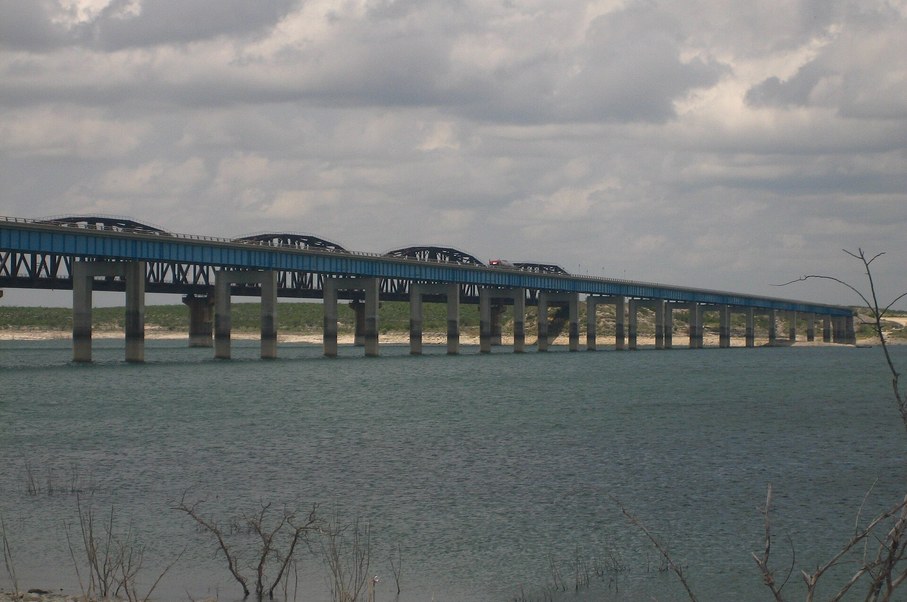
Amistad Reservoir on the Rio Grande gained more than 9 feet of water in the last 30 days, and that rise is the brightest spot on the West Texas reservoir map this fall. Texas Water Development Board data show the lake went from 43.6 percent of conservation capacity on Oct. 12 to 52.7 percent on Nov. 11, adding about 165,000 acre-feet. At Lee, Lee & Puckitt (LLP Ranchland), we checked the major lakes west of US-281 to see where the October and early November rain actually turned into stored water.
Why Amistad Moved
Juan Anciso of Texas A&M AgriLife Extension said in the Nov. 10 crop report that watershed inflows from the Pecos and Devils rivers lifted Amistad from about 30 percent to more than 50 percent of capacity over the fall. Downstream, Falcon Reservoir sits at about 20 percent, and TWDB shows it edging from 20.8 to 21.6 percent over the past month. Anciso noted that much of the moisture from this season’s Pacific hurricanes tracked into New Mexico, Arizona, Colorado and Utah rather than the Rio Grande watershed. For irrigation districts and Rio Grande Valley farms that depend on those allotments, a fuller Amistad is welcome news, though both lakes remain well short of full.
The Rest of the Map
Here is how other western lakes changed between Oct. 12 and Nov. 11, according to TWDB:
- Lake Meredith (Panhandle): 44.5 to 46.5 percent
- Red Bluff (Pecos River): 46.3 to 43.8 percent
- O.H. Ivie (Concho and Colorado): 41.1 to 40.8 percent
- Medina Lake (Hill Country): 28.6 to 27.1 percent
- Mackenzie (Briscoe County): 10.8 percent, unchanged
- E.V. Spence (Coke County): 9.2 to 9.4 percent
- Twin Buttes (San Angelo): 4.7 to 4.2 percent
- Greenbelt (Donley County): 4.4 to 4.2 percent
Most of these numbers barely moved. Rain fell widely across the western half of the state, but much of it soaked into dry ground rather than running off into creeks and rivers. Lake Meredith was the main exception outside the Rio Grande, picking up about 2 percentage points.
What District Reports Say About Stock Tanks
The same Nov. 10 AgriLife report described the gap between rainfall and runoff district by district. In the Southwest district, rain was not heavy enough to produce runoff that would raise pond levels in some areas. In West Central Texas, winter grasses were growing well, but stock tanks still needed runoff water. In the Rolling Plains, rain filled stock tanks in some areas. In Central Texas, showers of half an inch to 1.25 inches were not enough to put running water in tanks.
For ranchers, that means grass may look better than the water picture really is. Before turning out cattle or taking on more stockers for winter grazing, walk the tanks, check troughs and wells, and confirm that pumps and storage are ready for a dry spell.
Water and Land Value
Water is the first question nearly every ranch buyer asks, and a wet fall does not change what a property’s water looks like across a full drought cycle. When we value or market a ranch, we look at:
- Wells: depth, production, water quality and pump condition, plus any groundwater district permits or limits.
- Surface water: stock tanks, springs, creek and river frontage, and any adjudicated surface water rights.
- Distribution: pipelines, storage tanks and troughs that let a ranch use all its grass.
- Disclosure: Texas sellers now answer more detailed water questions on the TREC disclosure form, so gather well logs and records early.
Running water on a river ranch, a deep reliable well or a set of tanks that hold through summer can separate one property from another in a way acreage alone never will.
Ask Our Brokers
Lee, Lee & Puckitt dates to 1962, and since 2003 our team has closed more than 800,000 acres of ranch and farm land, valued at more than $950 million, across 67 counties in Texas and New Mexico. Call 325.655.6989 or visit llpranchland.com.
Frequently Asked Questions
How full is Amistad Reservoir right now? TWDB data show Amistad at 52.7 percent of conservation capacity on Nov. 11, 2026, up from 43.6 percent on Oct. 12.
Why are most West Texas lakes still low after the rain? Much of the rain soaked into dry soils instead of running off. AgriLife district reports said many stock tanks still needed runoff.
How does water affect ranch value in West Texas? Reliable wells, tanks, springs and river frontage are among the biggest drivers of value and buyer interest.
Who can help me value a ranch with water? Lee, Lee & Puckitt of San Angelo provides ranch sales, appraisals and Broker’s Price Opinions across Texas and New Mexico.
About Lee, Lee & Puckitt
Lee, Lee & Puckitt opened in Bronte in 1962 and now operates from San Angelo. The partners run livestock themselves, and our Brokers and Agents sell and appraise ranch land, complete Broker’s Price Opinions and defend landowner rights.
Sources
- Texas Water Development Board, Water Data for Texas, Amistad Reservoir 30-day data: https://www.waterdatafortexas.org/reservoirs/individual/amistad
- Texas Water Development Board, Water Data for Texas, Falcon Reservoir: https://www.waterdatafortexas.org/reservoirs/individual/falcon
- Texas Water Development Board, Water Data for Texas, statewide reservoir conditions, checked Nov. 11, 2026: https://www.waterdatafortexas.org/reservoirs/statewide
- Texas A&M AgriLife Today, “Texas citrus undersized, but yield outlook good as harvest begins,” Texas Crop and Weather Report, Nov. 10, 2026: https://agrilifetoday.tamu.edu/2026/11/10/texas-citrus-undersized-but-yield-outlook-good-as-harvest-begins/
- Related: Land appraisals, Contact LLP, Coke County Ranch News: E.V. Spence Reservoir Near Robert Lee Sits Below 10 Percent, Texas Ranch News: New TREC Water Rights Disclosure Puts Wells and Stock Tanks on the Table
Photo: Billy Hathorn at en.wikipedia, CC BY-SA 3.0, via Wikimedia Commons (https://commons.wikimedia.org/wiki/File:Lake_Amistad_IMG_0294.JPG). Cropped.
