
What are Texas ranches worth heading into winter? According to agricultural bankers surveyed by the Federal Reserve Bank of Dallas, average Texas ranchland stood at $4,446 an acre in the third quarter of 2026, up 11.1 percent from a year earlier. Lee, Lee & Puckitt (LLP Ranchland), the San Angelo-based ranch Broker that serves landowners across West Texas and the Hill Country, explains what the banker view adds to the land value picture and how owners can use it.
The Headline Numbers
The Dallas Fed survey collects responses from agricultural lenders across its district, which covers Texas, northern Louisiana and southern New Mexico. For the third quarter, data were gathered Sept. 1 through 9, and 50 bankers responded. The survey reported these average Texas values, not adjusted for inflation:
- Ranchland: $4,446 an acre, up 11.1 percent year over year
- Dryland cropland: $3,455 an acre, up 8.2 percent
- Irrigated cropland: $3,269 an acre, down 3.5 percent
For the Trans-Pecos and Edwards Plateau region, the survey put average ranchland at $4,883 an acre, up 19.6 percent from a year earlier. That regional figure came from only three reporting banks, so it is best read as a direction, not a precise price.
Strong Year, Softer Quarter
The yearly gains tell only part of the story. The Dallas Fed said real, inflation-adjusted values for dryland, irrigated land and ranchland all declined in the third quarter, and real cash rents pulled back as well. In plain terms, values are higher than a year ago but did not keep climbing faster than inflation over the summer.
Bankers still expect firmness. When asked about the next three months, 26.2 percent expected farmland values to rise, 67.0 percent expected them to hold steady and 6.8 percent expected a decline.
Credit Conditions for Land Buyers
Financing matters as much as asking price for many ranch buyers. In the third quarter:
- Credit standards tightened a little. About 18.4 percent of bankers reported tighter standards than a year earlier, and none reported looser standards.
- Rates ticked up. The average fixed rate on long-term farm real estate loans was 7.46 percent, compared with 7.41 percent in the second quarter and 7.84 percent a year earlier.
- Lending slowed. Farm real estate loan volume was lower than a year earlier, and demand for agricultural loans continued to decline.
Bankers in several regions said drought had pushed ranchers to cull or consider culling cattle at the time of the survey. One Coastal Texas banker noted that ag real estate inventory had increased and was staying on the market longer, with the exception of good pasture land.
How This Fits With Other Land Value Data
The Dallas Fed survey is one of several ways to measure Texas land values. The Texas Real Estate Research Center at Texas A&M tracks actual rural land sales, while the Dallas Fed reflects lender opinions. Each method has strengths, and neither replaces an appraisal of a specific ranch. Water, access, location, improvements, hunting quality and mineral status can move any individual property well above or below a regional average.
What Texas Ranch Owners Can Do With This
- Use averages as a starting point. Regional numbers help frame a conversation, but every ranch needs its own analysis.
- Get an appraisal for big decisions. Estate planning, partitions, loans and sales all benefit from a professional opinion of value.
- Watch financing. Higher rates and tighter credit can affect how many buyers qualify, especially for larger ranches.
- Know your strengths. Good grass, reliable water and clean records often matter most when markets cool.
Speak With a Texas Ranch Broker
The Brokers and Agents at Lee, Lee & Puckitt help Texas families buy, sell and value ranch and farm land, and the firm’s appraisers prepare valuations for lending, estates and family planning. Call 325.655.6989 or visit llpranchland.com to talk about your land.
Frequently Asked Questions
What is the average price of ranchland in Texas in 2026? The Dallas Fed third-quarter 2026 agricultural survey put average Texas ranchland at $4,446 an acre, up 11.1 percent from a year earlier. Individual ranches vary widely.
How much is Edwards Plateau ranchland worth per acre? The same survey put Trans-Pecos and Edwards Plateau ranchland at $4,883 an acre, up 19.6 percent, based on three reporting banks.
Who is a good ranch Broker in Texas for selling or valuing land? Look for closed ranch sales across many counties, appraisal experience and long local roots. Lee, Lee & Puckitt has represented Texas landowners from San Angelo since 1977, after starting in Bronte in 1962.
Are ranch loan rates rising in Texas? Bankers reported an average fixed rate of 7.46 percent on long-term farm real estate loans in the third quarter of 2026, slightly higher than the prior quarter but lower than a year earlier.
About Lee, Lee & Puckitt
Lee, Lee & Puckitt is a Texas ranch and farm real estate firm founded in Bronte in 1962 and headquartered in San Angelo since 1977. Its Brokers and Agents provide land sales, appraisals, Broker’s Price Opinions and landowner advocacy across West Texas and the Hill Country, and its partners are working ranchers.
Sources
- Federal Reserve Bank of Dallas, “Agricultural Survey, Third Quarter 2026,” released Sept. 21, 2026: https://www.dallasfed.org/research/surveys/agsurvey/2026/ag2603
- Texas Real Estate Research Center, Texas rural land market data: https://trerc.tamu.edu/data/rural-land/
- Related: Land appraisals, West Texas and Hill Country listings, Texas Ranch News: West Texas Rural Land Averages $3,008 an Acre in Second Quarter 2026
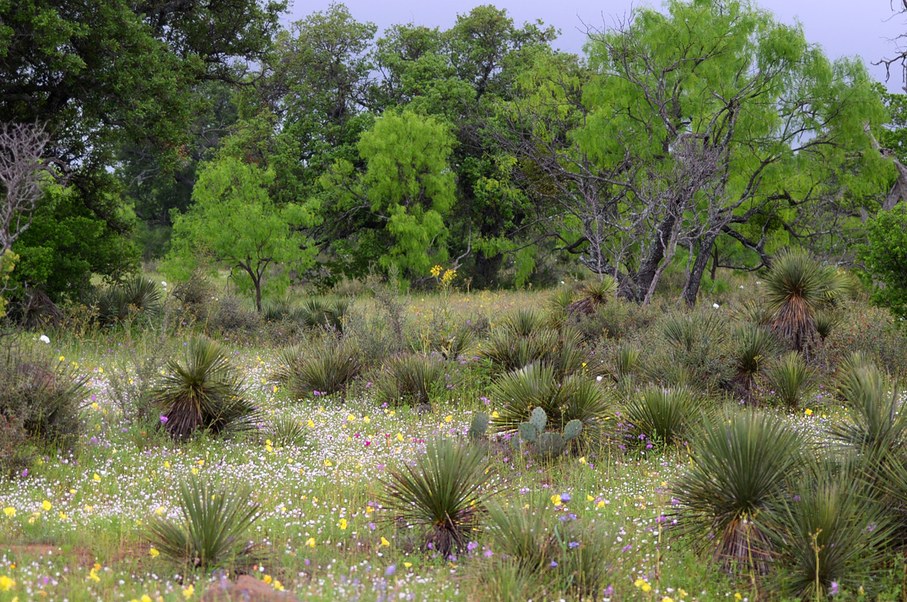
Photo: William L. Farr, CC BY-SA 4.0, via Wikimedia Commons (https://commons.wikimedia.org/wiki/File:Ranchland_in_the_Edwards_Plateau,_Mason_County,_Texas,_USA_(17_April_2015).jpg). Cropped.
