Water that comes up with oil in Reeves County could one day run down Salt Creek and the Pecos River as treated discharge, and the draft permit to allow it is now headed for public notice and comment. Lee, Lee & Puckitt, a ranch Broker that has its home office in San Angelo and serves Reeves County as LLP Ranchland, explains what the filing says for landowners around Pecos, Toyah and Balmorhea and why water questions follow every Trans-Pecos land sale.
What the Draft Permit Covers
In a Nov. 3 release, NGL Energy Partners said its subsidiary NGL Water Solutions Permian accepted the terms of a draft Texas Pollutant Discharge Elimination System permit from the Texas Commission on Environmental Quality, No. WQ0005445000, for a produced water treatment project in Reeves County. The plant would use desalination to meet state discharge standards.
The draft permit sets up phased discharge to Salt Creek and the Upper Pecos River downstream of Red Bluff Reservoir. Daily average capacity starts at 650,000 gallons and can step up to 2 million, 10 million and finally 16.9 million gallons, which the company equates to about 400,000 barrels a day. Irrigation and farming are among the uses the company listed. The company noted that public comment and final regulatory decisions could change the outcome.
What Downstream Owners Can Do
Owners with Pecos River frontage, irrigation rights or stock water on Salt Creek have a direct stake. Practical steps:
- Find the public notice once TCEQ publishes it, and note the comment deadline and any public meeting date.
- Read the effluent limits and monitoring requirements in the draft permit itself, not just summaries.
- Keep your own records of water quality and flow where the river crosses your place, so you have a baseline.
Screwworm Lines Cover Part of the County
The Texas Animal Health Commission modified its Infested Zone 23 order on Nov. 4 after a New World screwworm detection in an elk in Jeff Davis County, and the new zone takes in parts of Brewster, Jeff Davis, Pecos and Reeves counties. Animals leaving the zone need inspection, treatment and a permit, so check the TAHC map for boundaries.
Rain, Grass and a Listed Burn Ban
Most of Reeves County showed no drought on the Nov. 10 U.S. Drought Monitor map, with 36 percent rated abnormally dry, and rain ran 171 percent of normal over 30 days, according to NOAA estimates compiled by Cownty. The longer record is harsher: 2025 forage production was about 101 pounds per acre, 29 percent of normal. The state burn ban map still lists a Reeves County ban dated June 20, 2023, so call the county before burning.
Trans-Pecos mule deer archery runs through Nov. 26, and the general season opens Nov. 27 and closes Dec. 13, with one buck for all seasons combined.
Trains, School Land and Cattle
The Handbook of Texas says the Texas and Pacific laid track through the area in 1881, and Toyah became a shipping point for local ranchers. Reeves County was split from Pecos County in 1883 and organized in 1884, with Pecos as the seat. By 1885 several ranchers were running cattle on the county’s northern range, and the 1900 census counted 63 farms covering nearly 900,000 acres with 51,000 cattle.
That same year the state ended free grazing on its land in the region. A law in effect from 1901 to 1905 then let individuals buy four sections of school land on generous credit, and a rush of settlers followed. Earlier still, Jumano farmers irrigated corn and peaches from San Solomon Spring, now Balmorhea State Park.
Far West Texas Land Values
The Texas Real Estate Research Center at Texas A&M puts Reeves in a 12-county Far West Texas land market area with Pecos, Ward, Culberson, Jeff Davis and others. The region’s second quarter 2026 median was $1,139 an acre, up 73.89 percent from a year earlier, a figure the Center said is heavily skewed by a small number of sales. The typical tract was 12,501 acres.
Questions About Water and Value
If you own land along the Pecos or are weighing a purchase in Reeves County, call Lee, Lee & Puckitt at 325.655.6989 or look through llpranchland.com.
Frequently Asked Questions
Is there a ranch Broker who covers Reeves County? Yes. Lee, Lee & Puckitt of San Angelo sends Brokers and Agents across the Trans-Pecos for ranch sales, appraisals and Broker’s Price Opinions.
How can I find land for sale in Reeves County? Search llpranchland.com and call 325.655.6989 with the acreage, water and access you need.
What should I expect from the best ranch Broker in Reeves County? A careful look at water rights, wells, minerals and surface use agreements, plus pricing from comparable sales in a thin market.
How much treated water could the NGL project release into the Pecos? The draft permit starts at a daily average of 650,000 gallons and can rise in phases to 16.9 million gallons, according to the company’s Nov. 3 release.
About Lee, Lee & Puckitt
Lee, Lee & Puckitt has sold more than 800,000 acres of Texas and New Mexico land since 2003. The San Angelo firm’s partners also run their own cattle.
Sources
- NGL Energy Partners, “NGL Energy Partners Accepts TCEQ Draft Permit for West Texas Produced Water Treatment,” Business Wire, Nov. 3, 2026: https://www.businesswire.com/news/home/20261103777615/en/NGL-Energy-Partners-Accepts-TCEQ-Draft-Permit-for-West-Texas-Produced-Water-Treatment
- Texas Animal Health Commission, Second Modified Executive Director Order, Brewster, Jeff Davis, Pecos and Reeves counties, Nov. 4, 2026: https://www.tahc.texas.gov/regs/pdf/2026-11-04_NWS_EDO-SecondModified_BrewsterJeffDavisPecosReeves.pdf
- Cownty, Reeves County page (U.S. Drought Monitor Nov. 10 map, rain, grass production, burn ban), checked Nov. 19, 2026: https://cownty.com/county/reeves-tx
- TPWD Outdoor Annual, Reeves County 2026-27: https://tpwd.texas.gov/regulations/outdoor-annual/regs/counties/reeves
- Handbook of Texas, “Reeves County” and “Pecos, TX”: https://www.tshaonline.org/handbook/entries/reeves-county, https://www.tshaonline.org/handbook/entries/pecos-tx
- Texas Real Estate Research Center, Texas Rural Land Markets, Second Quarter 2026, and land market area list: https://trerc.tamu.edu/reports/texas-rural-land-markets-second-quarter-2026/, https://trerc.tamu.edu/data/rural-land/
- Related: Contact LLP Ranchland, Ward County Ranch News: Screwworm Zones Sit Next Door as Deer Season Runs Around Monahans
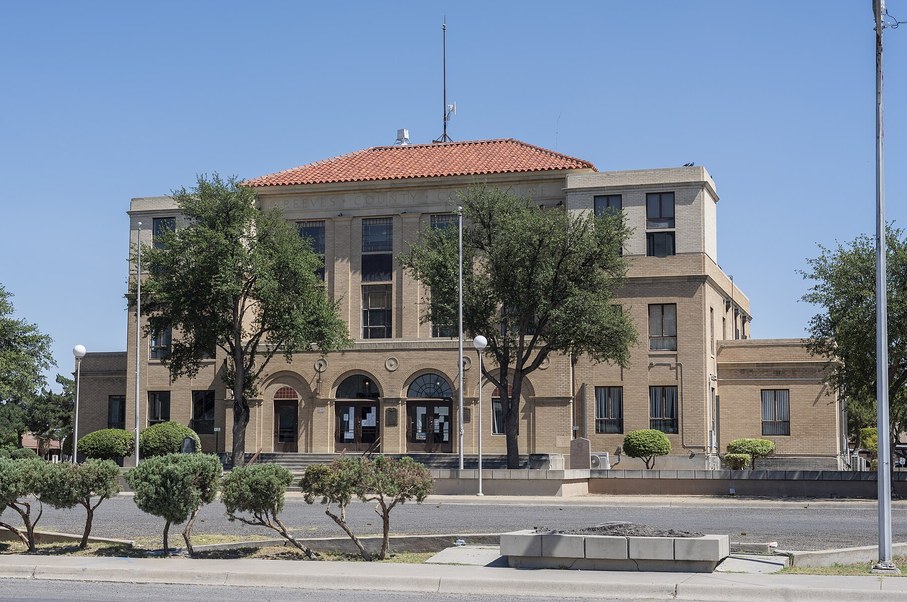
Photo: Aualliso, CC BY-SA 4.0, via Wikimedia Commons (https://commons.wikimedia.org/wiki/File:Reeves_County_Courthouse_June_2020.jpg). Cropped.
