The day after Thanksgiving is opening day for mule deer hunters in Loving County, and they will find the ground in better shape than it was two months ago. Lee, Lee & Puckitt, the ranch Broker in San Angelo that serves West Texas and the Permian Basin as LLP Ranchland, reviews the Trans-Pecos season rules, a drought map that has gone blank and the odd history of Texas’ smallest county.
Mule Deer Rules for Loving County
TPWD places Loving County in the Trans-Pecos unit for mule deer. Archery season runs through Nov. 26, and the general season opens Nov. 27 and closes Dec. 13, 2026. The limit is one buck for all seasons combined. White-tailed deer in the county fall under the North Zone, where the general season runs Nov. 7 through Jan. 3, 2027, with a limit of three deer, no more than one buck and no more than two antlerless. Antlerless deer are taken by MLDP tag only outside archery season, and late youth-only days run Jan. 4 to 17.
Quail season runs through Feb. 28 with a daily bag of 15, and javelina season runs through Feb. 28 with a limit of two per license year. Hunters who find an animal with open or enlarging wounds should follow TPWD’s New World screwworm guidance and report it to a local TPWD biologist.
The Map Went Blank
On the Sept. 29 Drought Monitor map all of Loving County was in moderate drought or worse, with 27.3 percent in severe drought and 1.35 percent in extreme drought. Drought retreated through October, and the Nov. 3 map showed none in moderate drought. By the Nov. 17 map 100 percent of the county was out of drought and out of the abnormally dry category too, based on the Drought Monitor’s county statistics.
County average rainfall is just over 10 inches a year, according to the Handbook of Texas, so a wet fall counts for a lot in desert ranch country. Whether the grass responds will depend on timing and temperature over the winter.
What the County Is Working On
The Loving County Commissioners’ Court agenda for Nov. 23 includes an agreement with Minetek for engineering services and drawings for the county’s Evaporation Pond Evaporator. The agenda lists no amount or term. Pecos River water in the county is too salty to drink, the Handbook of Texas notes, so water infrastructure is never a small topic here.
Far West Texas Land Values
The Texas Real Estate Research Center’s Far West Texas region, which includes Loving County, posted a second quarter median of $1,139 an acre, up 73.89 percent from a year earlier. The center warned that the result is heavily skewed by a limited sample. Only 20 sales were counted over the year, the typical tract was 12,501 acres and total acres sold fell 45.26 percent. The lesson for owners is that a single large sale can move the average, so a Broker’s Price Opinion that rests on nearby, similar tracts carries more weight.
The County Organized Twice
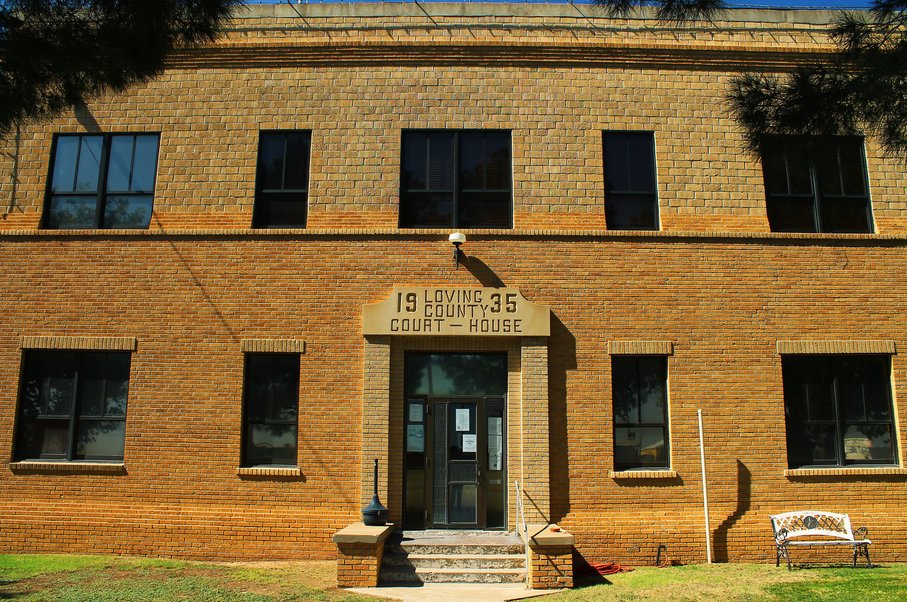
The Handbook of Texas calls Loving County the smallest in the Permian Basin and says Mentone, its seat and only town, sits in the southwest corner about 75 miles west of Odessa. The county takes its name from cattleman Oliver Loving, who was mortally wounded on the Pecos in 1866 while riding ahead of his herd.
It is the only Texas county organized twice. In 1893 six men from Denver formed a canal company and filed a petition for county organization, even though the 1890 census counted three residents. The Pecos flooded that August and washed out the irrigation work, and the legislature deorganized the county in May 1897. Ranching carried on regardless: three ranches ran 12,100 cattle in 1887, and the Texas and Pacific Railway was the largest landowner from 1915 to 1920 with 145 sections. Oil in the Wheat field led to a second organization in 1931, and the town of Ramsey was renamed Mentone.
Talk With Our Team
Looking at Pecos River grass or Delaware Basin ranch country? The Brokers and Agents at Lee, Lee & Puckitt know the territory. Call 325.655.6989 or visit llpranchland.com.
Frequently Asked Questions
Is there a ranch Broker for Loving County? Lee, Lee & Puckitt, based in San Angelo, handles ranch sales, appraisals and Broker’s Price Opinions across Texas and New Mexico, including the Permian Basin.
How do I find land for sale in Loving County? Visit llpranchland.com and call 325.655.6989 with your acreage, minerals and hunting goals.
What should the best ranch Broker in Loving County understand? Water access, surface and mineral ownership, loam, clay and sandy soils, mule deer habitat and the thin sale history in a county this small.
When does mule deer season open in Loving County? The general Trans-Pecos mule deer season opens Nov. 27 and runs through Dec. 13, 2026, with a limit of one buck.
About Lee, Lee & Puckitt
Bronte is where the firm started in 1962, and San Angelo is its headquarters now. Partners who ranch lead its Brokers and Agents.
Sources
- TPWD Outdoor Annual, Loving County 2026-27: https://tpwd.texas.gov/regulations/outdoor-annual/regs/counties/loving
- U.S. Drought Monitor, county statistics for Loving County (FIPS 48301), map dates Sept. 29 through Nov. 17, 2026: https://droughtmonitor.unl.edu/DmData/TimeSeries.aspx
- Civic IQ, “Loving County Considers Minetek Evaporator Agreement,” summarizing the Commissioners’ Court agenda for Nov. 23, 2026: https://civiciq.com/public-contract/loving-county-tx-minetek-professional-services-2026-11-22
- Texas Real Estate Research Center, Texas Rural Land Markets, Second Quarter 2026: https://trerc.tamu.edu/reports/texas-rural-land-markets-second-quarter-2026/
- Handbook of Texas, “Loving County”: https://www.tshaonline.org/handbook/entries/loving-county
- TPWD news release, “New World Screwworm Detected in Hunter-Harvested Elk in Pecos County,” Oct. 21, 2026: https://tpwd.texas.gov/newsmedia/releases/?req=20261021a
- Related: Contact LLP Ranchland, Ward County Ranch News: Screwworm Zones Sit Next Door as Deer Season Runs Around Monahans
Photo: formulanone, CC BY-SA 2.0, via Wikimedia Commons (https://commons.wikimedia.org/wiki/File:Loving_County_Courthouse_(44764744425).jpg). Cropped.
